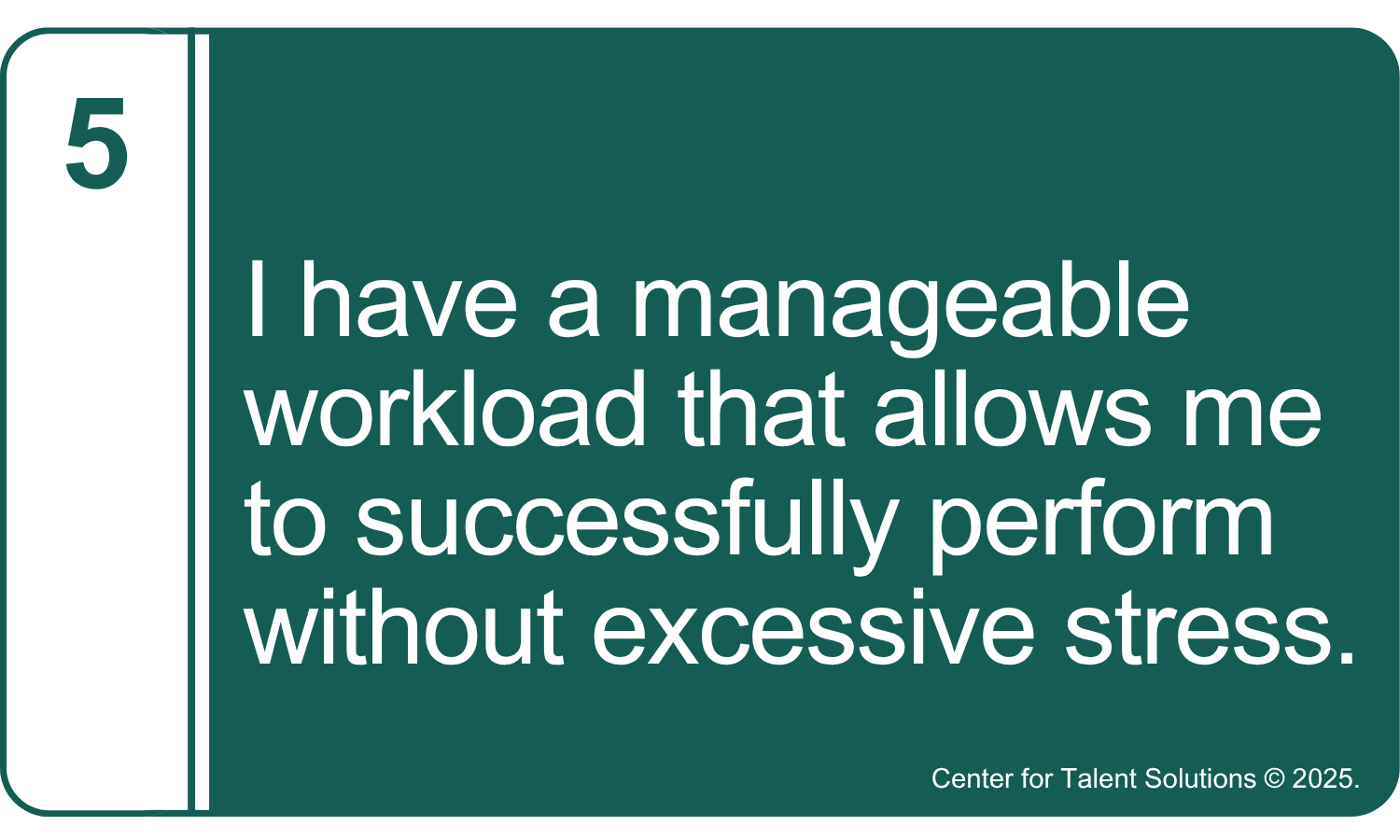
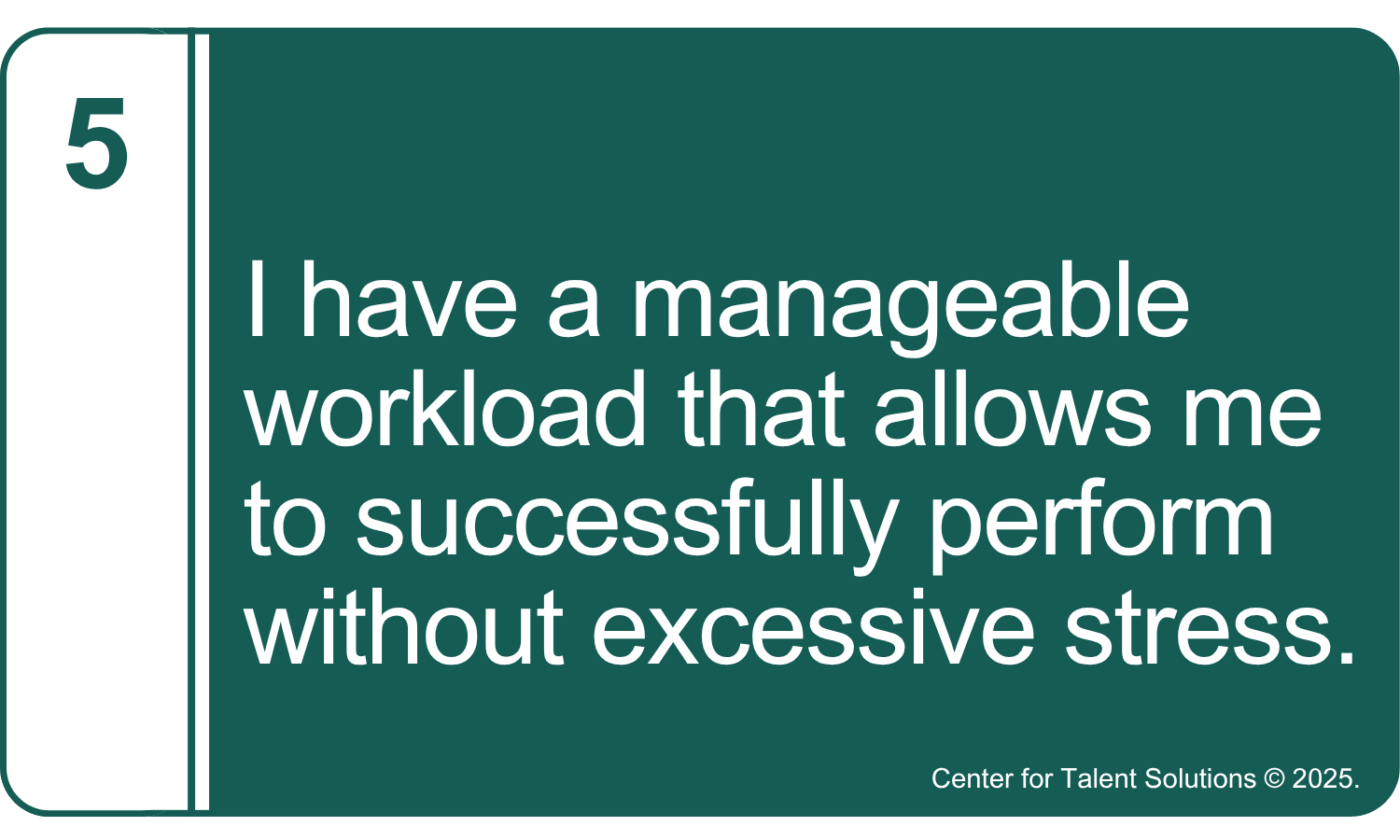
Time: 30 Minutes - 1 Hour
STEP 1: Arrange a dedicated time to meet with your team member, either in person or virtually, to discuss their current workload and its impact on their performance and well-being.
STEP 2: Before the meeting, ask your team member to reflect on the following questions to gain clarity on their workload:
- On a scale of 1 to 5 (1 = overwhelmed with work; 5 = workload is completely manageable), how would you rate your current workload balance?
- Are there specific tasks or projects that feel overwhelming or cause excessive stress?
- In the past 6 months, what percentage of your planned personal activities (e.g., family time, hobbies, or rest) have you postponed or canceled due to work demands?
- Which projects or responsibilities are most impacting your ability to maintain a manageable workload?
- What strategies or adjustments could help you better manage your workload (e.g., delegation, rescheduling, or additional resources)?
STEP 3: During the meeting, review the team member’s responses to the questions above to build a clear understanding of their workload balance. Keep the following in mind:
- Listen actively and encourage openness while maintaining a solution-oriented approach.
- Acknowledge that some projects may temporarily increase workload but aim to restore balance upon completion.
- Clarify expectations around project timelines and discuss potential adjustments to reduce stress.
STEP 4: Collaborate with your team member to outline specific actions to improve or maintain their workload balance. Examples include:
- Reprioritizing or redistributing tasks to focus on high-impact work.
- Delegating low-priority tasks to other team members when feasible.
- Adjusting deadlines or securing additional resources for demanding projects.
- Scheduling protected time for focused work or personal well-being. Document these actions with clear timelines and responsibilities for both myself and my team member.
STEP 5: Schedule monthly check-ins (15–20 minutes) with your team member to evaluate the effectiveness of the agreed actions. Reassess their workload balance using the same 1-to-5 scale and adjust strategies as needed to ensure ongoing manageability and minimal stress.
